
When’s the last time you had a steaming bowl of ramen? The Japanese comfort food, known the world over as equal parts quick eats and elevated cuisine, is a dish of many forms and different styles, all sharing one through-line – ramen simply makes you feel better.
And now, lovers of the big bowls can explore the background of the dish, and the art that it inspires, right here in the heart of Hollywood, thanks to JAPAN HOUSE’s “The Art of the Ramen Bowl” exhibit.
A Global Food
Ramen – most simply defined as wheat noodles served in rich broth with toppings – was introduced to Japan in the late 19th century and grew popular over the following decades, becoming deeply connected with the culture of postwar Japan. Originally fast food served in a single bowl, ramen was a simple hot noodle soup, laden with delicious ingredients, that could satiate hunger at a reasonable price.
Ramen’s lineage stems from similar Chinese noodle soups, but the everyday dish has evolved since being imported to Japan. In each region, ramen has taken on a life of its own, featuring diverse ingredients and regional seasonings. With the growth of Japan’s economy and the spread of Japanese food globally, the dish has further evolved to suit the tastes of its fans. It’s why you can now find ramen that is vegan, halal or gluten-free. It is no exaggeration to say that ramen has become among the most popular Japanese foods in the world, even challenging ubiquitous sushi for global awareness.
Bowls of Love
Like many dishes with a long history, ramen isn’t just about its ingredients or its preparation, but a sum total of all components, including even the bowls it is served in.
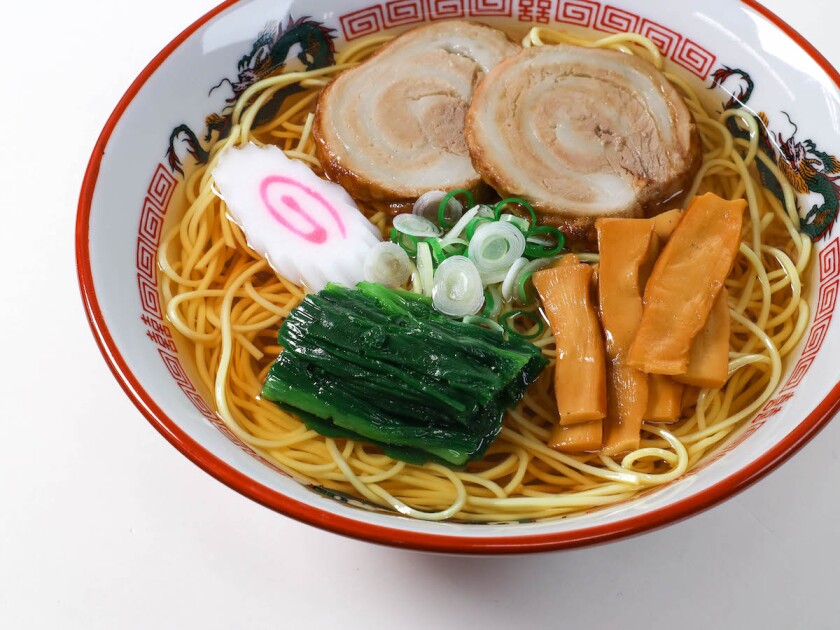
In Japanese food culture, vessels of diverse shapes, styles and materials – including ceramics, lacquer, metal and glass – are important, even for ordinary meals. Following this, the bowls used in Japanese ramen shops are typically porcelain donburi bowls with almost uniform dimensions, materials, shapes, and designs. Almost 90% of these are produced in a specific location – the Tono area in the eastern part of Mino, within Gifu Prefecture.
So important is this specific bowl to ramen that many have also made their way to ramen shops beyond Japan. In this humble vessel, the soup’s many variations are enjoyed around the world. Yet, although the flavors in ramen – the soup, noodles and ingredients – are a focus of attention, from online reviews to the Michelin Guide, the quality of the bowls themselves is rarely discussed, even though they’re universal to the ramen experience.
Art as the Main Dish
“The Art of the Ramen Bowl,” which opens on March 18 and runs through July 5 at JAPAN HOUSE Los Angeles, is looking to remove the anonymity of ramen’s dishware and focus on its craftsmanship and ties to Japanese culture. The exhibit, which explores the history of Mino ceramics, doesn’t stop with a science or history lesson – 30 artists have created custom-designed bowls, adding their own flair to a universal object, not unlike the many regional varieties of ramen that fill them.
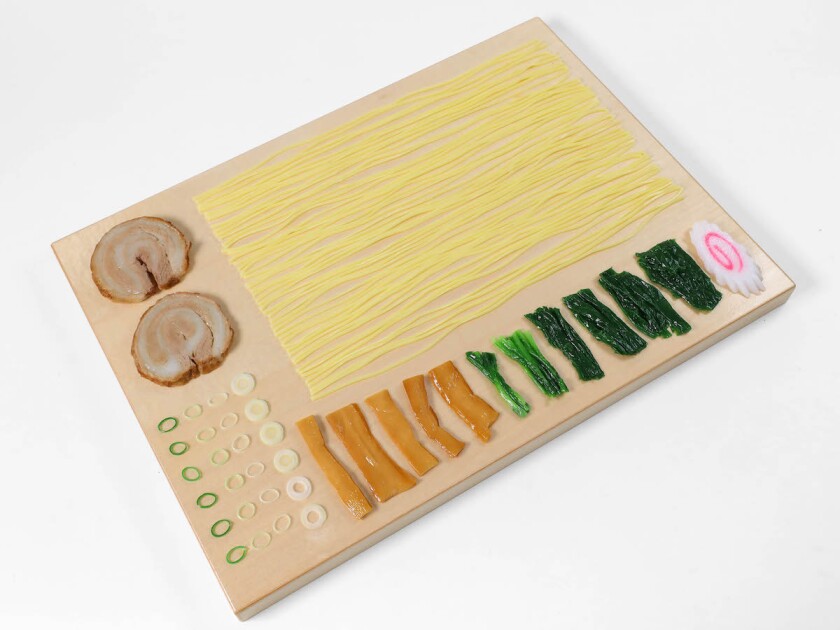
In addition to the beautiful bowls, JAPAN HOUSE is offering a unique deconstruction of the familiar Japanese ramen. Through stunning visuals, the story of each ingredient is told. As patrons walk through the exhibit, they’ll get a sense of the cultural touchstones of the dish and how it’s been shaped, remixed and adapted to become a universal cultural food. This “dissection” of the food also serves to separate it from the donburi and further highlights the bowls themselves.
In addition to the static exhibit, JAPAN HOUSE is offering several special presentations for anyone interested in learning more about the art of ramen. “Delicious Design: A Conversation with The Art of the Ramen Bowl Exhibition Curators” on March 22 will feature designer Taku Satoh and art writer, editor and curator Mari Hashimoto in a fascinating discussion on the project, its synthesis and its goals.
“The Ceramics of Mino: 500 Years of Beauty and Innovation” on April 5 gives an in-depth overview about Mino ceramics and their importance not only in the creation of donburi and other housewares but also their impact on areas as diverse as medicine and architecture. The discussion is led by Morgan Pitelka, Chair of the Department of Asian and Middle Eastern Studies at the University of North Carolina at Chapel Hill.
And, if all this talk of ramen has given you an insatiable hunger for the dish, JAPAN HOUSE has you covered. From May to July, they will be running a pop-up ramen program featuring delicious bowls from various ramen restaurants. Details will be shared on their restaurant’s home page, soon.
JAPAN HOUSE seeks to foster awareness and appreciation for Japan and its culture. With three global hubs in London, Sao Paulo and Los Angeles, JAPAN HOUSE showcases art, gastronomy, innovation and more. Their central Hollywood and Highland location occupies two floors and offers more than 15,000 square feet of space featuring exhibit space, a library, event venues and spectacular views.
For more information, visit japanhousela.com.
About the Author


